
In-person in Los Feliz, Los Angeles | Online Across CA & FL
SOMATIC THERAPY
Deep Healing Where Mind, Body, and Spirit Meet

CHANGE THE PATTERNS THAT KEEP YOU STUCK
Some people come to somatic therapy without ever having done therapy before. Others have done years of deep, valuable work and are ready for the next step. Both paths lead here for the same reason: a sense that healing doesn't just happen in the mind — it happens in the body too.
Somatic therapy is built on a fundamental concept: you cannot separate mind from body. While traditional talk therapy focuses primarily on thoughts, beliefs, and narratives, somatic therapy works with the whole person. Your body is also telling a story. It might be emotions you couldn't express, trauma you survived, or anxiety that never fully resolved. You might notice it as tightness in your jaw, shoulders that never release, or an upper back that rounds and a chest that collapses under stress. Or a more pervasive sense of bracing — as if some part of you is always waiting for something to go wrong.
This is why you can understand something intellectually and still have your body react as if the old threat is still present.
Your conscious mind has processed it, but your body hasn't. The pattern lives in your nervous system, your muscle memory, and your automatic responses. These physical realities aren't just symptoms to manage, they can be viewed as doorways to deeper change, and the body is often the most direct route in.
Somatic therapy works directly with that physiological reality — using body awareness, breath work, movement, and nervous system regulation, often integrated with trauma therapies like EMDR, Brainspotting, and Trauma Resiliency Model — to help you release what's been held and build new patterns at the body level. With this kind of work, you're no longer just understanding a pattern, you're feeling it change in real time.


SOMATIC THERAPY CAN HELP YOU MOVE BEYOND:
Anxiety, trauma, and nervous system dysregulation
Chronic tension and pain with emotional roots
Disconnection from your body or emotions
Hypervigilance and difficulty feeling safe
Creative blocks and performance anxiety
Patterns you understand but can't seem to change
Dissociation and numbness
Shallow breathing and breathing restrictions
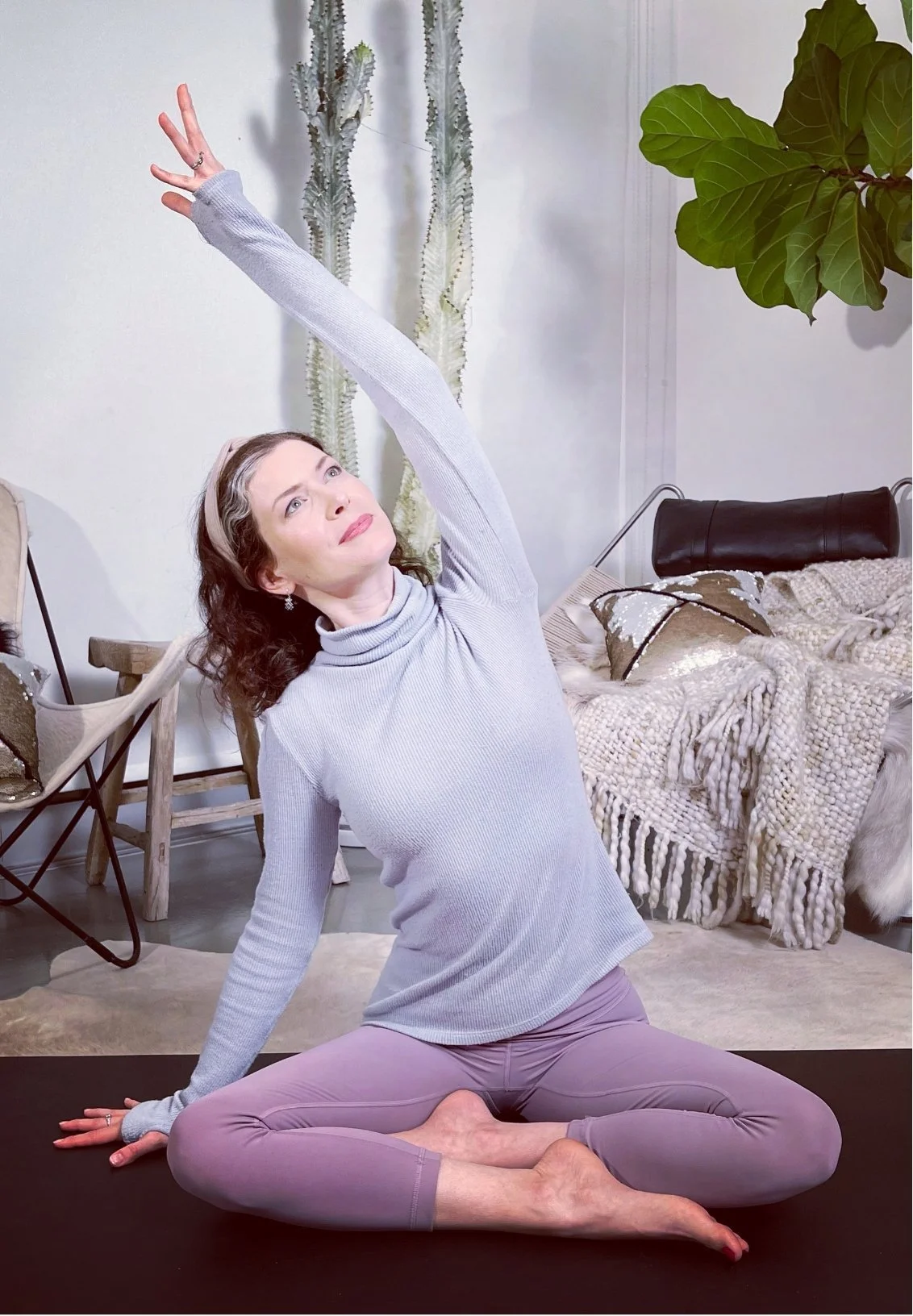
About My Background
I came to this work from multiple directions, and none of it was entirely planned.
I started performing in adolescence, then went on to formally study acting, classical vocal performance, movement, breath work, and yoga — learning intimately how the body expresses emotion, holds experience, and, when the conditions are right, opens into something extraordinary. As a performer, I know what it feels like to reach a flow state — and how that becomes difficult when you feel blocked or disconnected from yourself.
For over two decades, I taught yoga and worked as a Certified Yoga Therapist, bringing therapeutic practice to people of all ages and all body types, including those living with injuries, chronic pain, illness, and disability. I worked in cancer centers, hospitals, eating disorder clinics, and in my private yoga therapy practice.

It was in that work, doing yoga, meditation, and Reiki with people navigating serious and sometimes terminal illness, that something shifted in me. I had witnessed, again and again, the relief and transformation that became possible when mind and body finally came into harmony. I hadn't planned on becoming a therapist, but life led me there.
That same thread runs through my writing: I'm the author of a Mindfulness Workbook for Panic Attacks and the Chair Yoga Deck, which are practical guides built on the belief that healing happens when we meet the body where it is. For the past decade, I've specialized in trauma therapy, using EMDR, Brainspotting, and Trauma Resiliency Model — all inherently somatic approaches that work directly with how trauma is stored in the body and nervous system.
When I work with you, I draw from this entire landscape — not as separate skills, but as an integrated understanding of what it means to heal as a whole person: mind, body, and spirit.

Who SOMATIC WORK IS FOR
SOMATIC THERAPY TENDS TO BE ESPECIALLY POWERFUL FOR PEOPLE WHO:
-
You don't want to spend more time analyzing your relationships or revisiting your childhood. You want to feel different. Somatic work is less about discussing your experience and more about moving through it — using breath, body awareness, and nervous system tools to create real, felt change.
-
You understand your patterns, your attachment style, your triggers. But knowing why hasn't changed how you feel or how you react. Your mind is ready to move forward, but your body is still living in the past.
-
Your body is your instrument. You know what it's like when you can't access flow — when something is blocked and authentic expression feels just out of reach. Somatic work helps you come back to yourself.
-
Maybe you've learned to live in your head as a survival strategy. Maybe you dissociate when things get overwhelming, or you simply can't access what you're feeling physically. We start gently and build from there.
-
Trauma lives in the body — in tension patterns, breathing restrictions, nervous system dysregulation. You can talk about what happened, but to fully heal, you need to work with what's been stored physically.
-
You're not interested in managing symptoms forever. You want to actually feel different — to breathe differently, move differently, and inhabit your body as a safe and trustworthy place.
WHAT HAPPENS IN SESSIONS
Somatic therapy isn't one-size-fits-all. We design our work together based on what you need, what your body is ready for, and what actually helps you feel more regulated, present, and alive.
Building Body Awareness and Nervous System Regulation
We often start here — learning to notice what's happening in your body. If you've been disconnected for years, this alone is profound work. You learn to track sensations, notice patterns, and use nervous system regulation tools to shift from hyperactivation (anxiety, panic, hypervigilance) or hypoactivation (shutdown, numbness, dissociation) back to a regulated state. These aren't just relaxation exercises — they're tools for rewiring your nervous system's automatic responses.
01 —
Integration with Trauma Therapy
Somatic work integrates seamlessly with EMDR, Brainspotting, and other trauma therapies — tracking what's happening in your body as we process, noticing where trauma is held physically, using breathwork or movement to complete the stress cycle your body never got to finish.
02 —
Embodied Practices Tailored to You
Sessions might include breathwork, gentle movement, body scans, trauma-informed yoga practices, guided imagery, mantra and vocalization, or mindfulness. Everything is optional, collaborative, and adapted to what your system needs. Your body guides the work.
03 —
The Mind-Body-Spirit Dimension
Throughout, we're attending to all of you — not just your nervous system, but your beliefs, your sense of meaning, and your experience of living more fully and authentically in your own life.
04 —
SESSION FORMATS
Ongoing Somatic Therapy
Regular sessions weaving somatic practice into our work together, building capacity over time.
Intensive Sessions
Longer sessions (90 minutes to 3 hours) for deeper processing and integration.
Adjunct Somatic Work
If you're already working with another therapist, we can coordinate care and focus our sessions on body-based work and nervous system regulation.
FAQs
COMMON QUESTIONS
-
Not at all — especially if you already sense that your body is where the work needs to happen.
-
Everything is optional and adapted to you. Many approaches — including EMDR, Brainspotting, and Trauma Resiliency Model — involve no movement or touch at all.
-
No. Somatic work can process trauma through the body without verbally recounting every detail.
-
Very common, especially for trauma survivors. Disconnection is a protective response. We start gently and build your capacity over time. Feeling comes back.
-
It's woven throughout — we might notice where you feel something in your body, use a somatic practice to work with it, then process whatever arises. It's integrated into everything.

WHEN UNDERSTANDING ISN’T ENOUGH
Whether you've spent years in talk therapy or you've never done this work before, you may already sense that the healing you're looking for lives somewhere words can't always reach.
Let's help your body discover what it actually feels like to be present, regulated, and free.